> For the complete documentation index, see [llms.txt](https://docs.weka.io/llms.txt). Markdown versions of documentation pages are available by appending `.md` to page URLs; this page is available as [Markdown](https://docs.weka.io/4.1/support/the-wekaio-support-cloud/set-the-local-weka-home-to-send-alerts-or-events.md).
# Set the Local Weka Home to send alerts or events
Once the Local Weka Home is deployed, you can set it to send specific alerts or events by Email (SMTP), PagerDuty, and SNMP Traps (v1/v2c/v3).
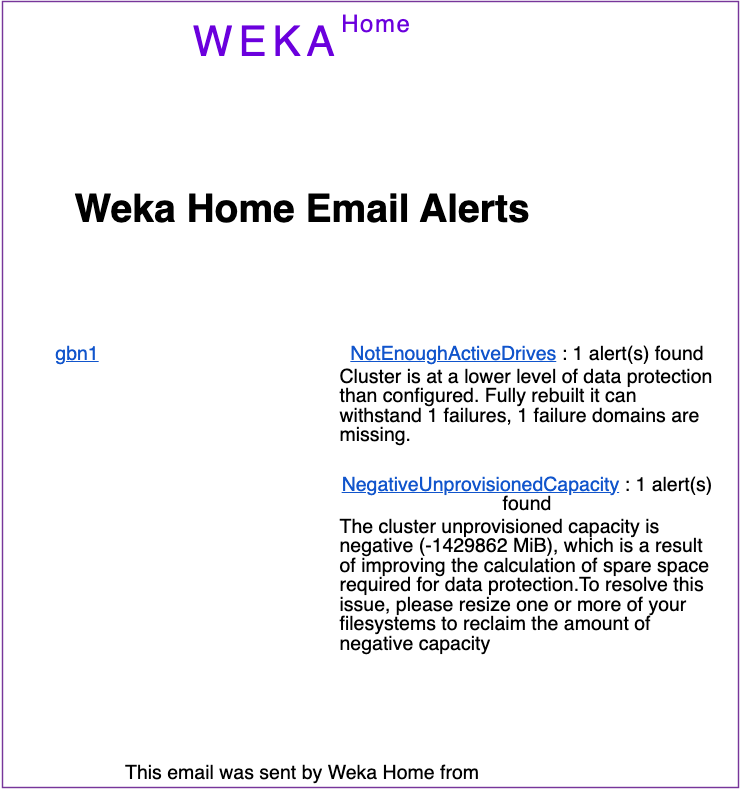
For example, you can set the Local Weka Home to send alerts by email to a specific address when the cluster is at a lower level of data protection than configured.
Weka Home email alert example
Setting the Local Weka Home to send events and alerts at a glance:
1. Set the destination on the **Integration** page.
2. On the **Rules** page, select the rule conditions to trigger specific alerts or events.
3. Assign the rule to the integration.
**Procedure:**
1. Access the Local Weka Home portal with an admin account and the password obtained.
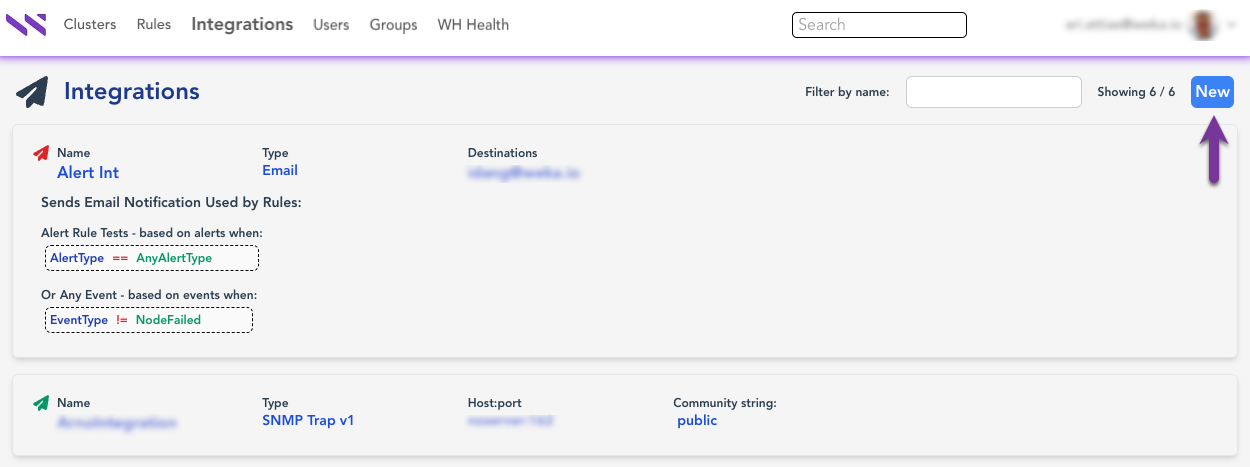
2. On the **Integration** page, select **New**.
Integrations page
3. On the **Create Integration** page, select one of the destinations and set the relevant values as follows:
{% tabs %}
{% tab title="PagerDuty" %}
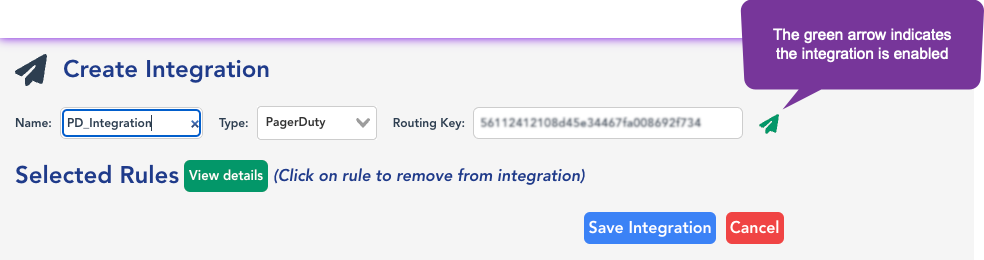
1. In **Name**, enter a meaningful name for the integration.
2. In **Type**, select the PageDuty type.
3. In **Routing Key**, set the routing key of your pager duty.
4. Verify that the integration is enabled (the arrow is green).
5. Select **Save Integration**.
PagerDuty integration
{% endtab %}
{% tab title="Email" %}
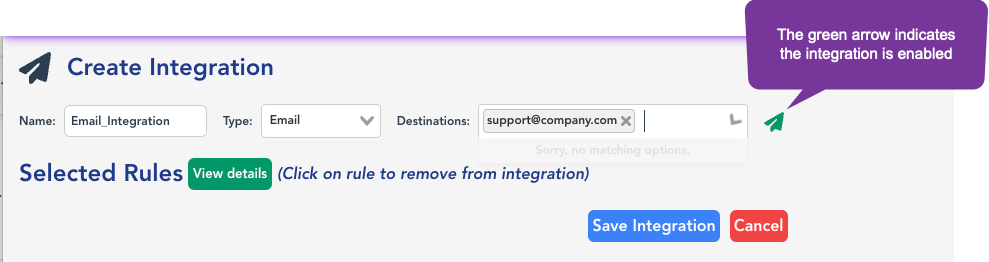
1. In **Name**, enter a meaningful name for the integration.
2. In **Type**, select the Email type.
3. In **Destination**, set the destination email address.
4. Verify that the integration is enabled (the arrow is green).
5. Select **Save Integration**.
Email integration
{% endtab %}
{% tab title="SNMP Trap" %}
1. In **Name**, enter a meaningful name for the integration.
2. In **Type**, select SNMP Trap.
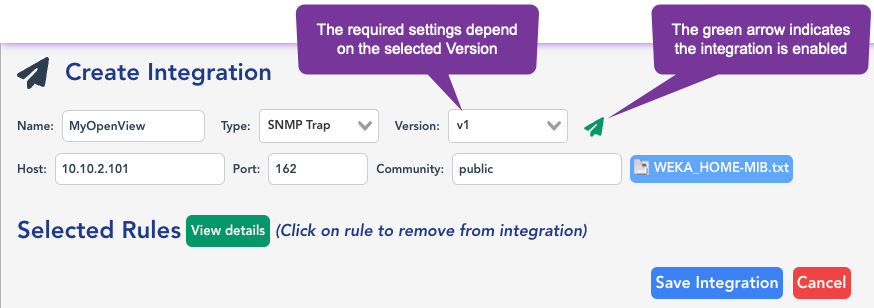
3. In the **Version**, select the required SNMP version to use with your SNMP-based tool.
4. Set the values of the properties required according to the selected version:
* **v1:** SNMP version 1, which only requires the SNMP server hostname or IP address and a plaintext community.
* **v2c:** SNMP version 2c, similar to SNMP v1, but adds support for 64-bit counters.
* **v3\_NoAuthNoPriv:** SNMP version 3 with security of a user name and EngineID, but without authentication and privileges.
* **v3AuthNoPriv:** SNMP version 3 with security of a user name, EngineID, and authentication but without privileges.
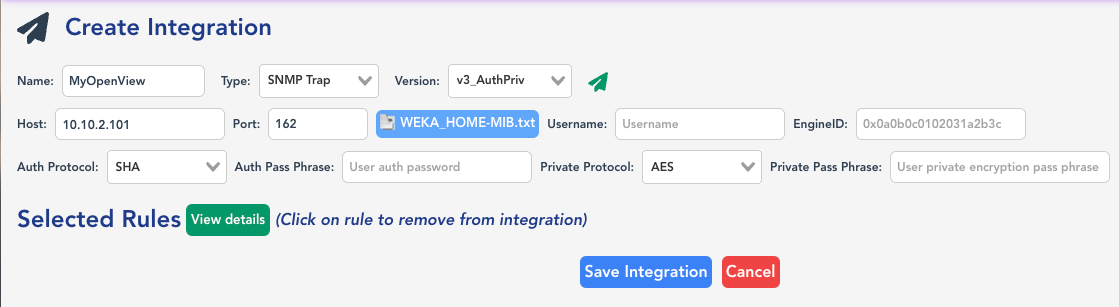
* **v3AuthPriv:** SNMP version 3 with security of a user name, EngineID, authentication, and privileges.
5. Verify that the integration is enabled (the arrow is green).
6. Download the WEKA\_HOME-MIB.txt file and apply it in your SNMP system.
7. Select **Save Integration**.
SNMP integration: v1
SNMP integration: v3_AuthPriv (v3 with authentication and privileges settings)
{% endtab %}
{% endtabs %}
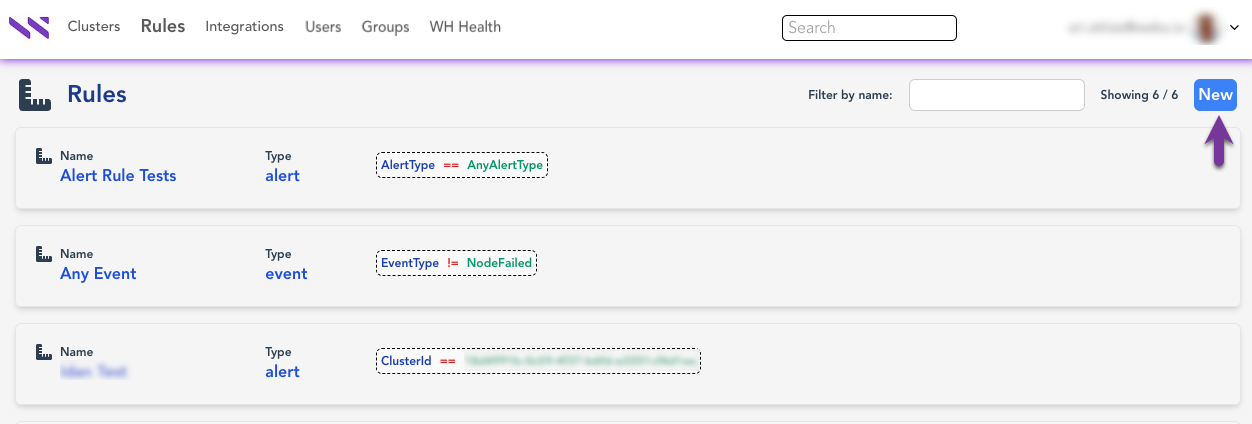
4. On the **Rules** page, select **New**.
Rules page
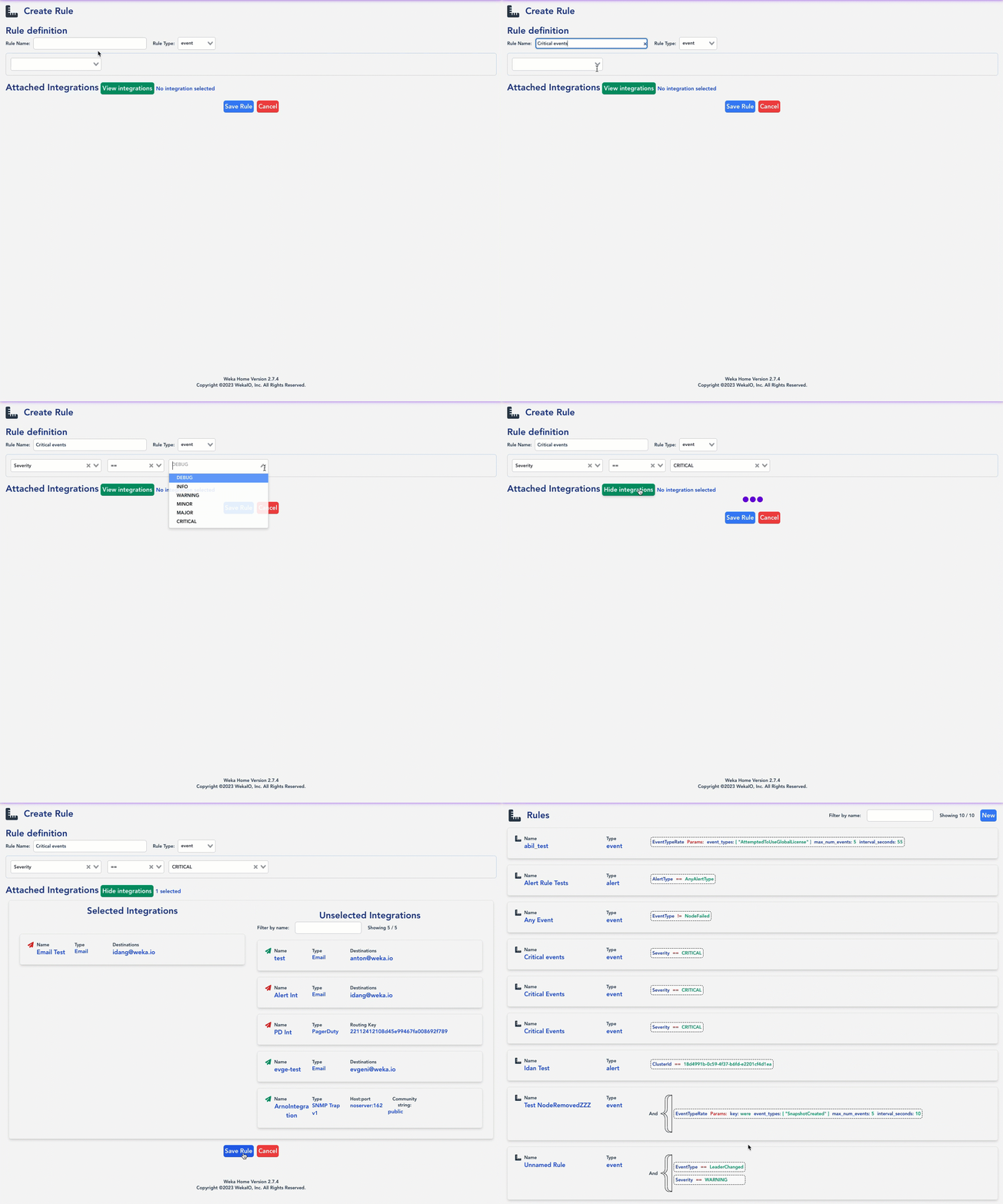
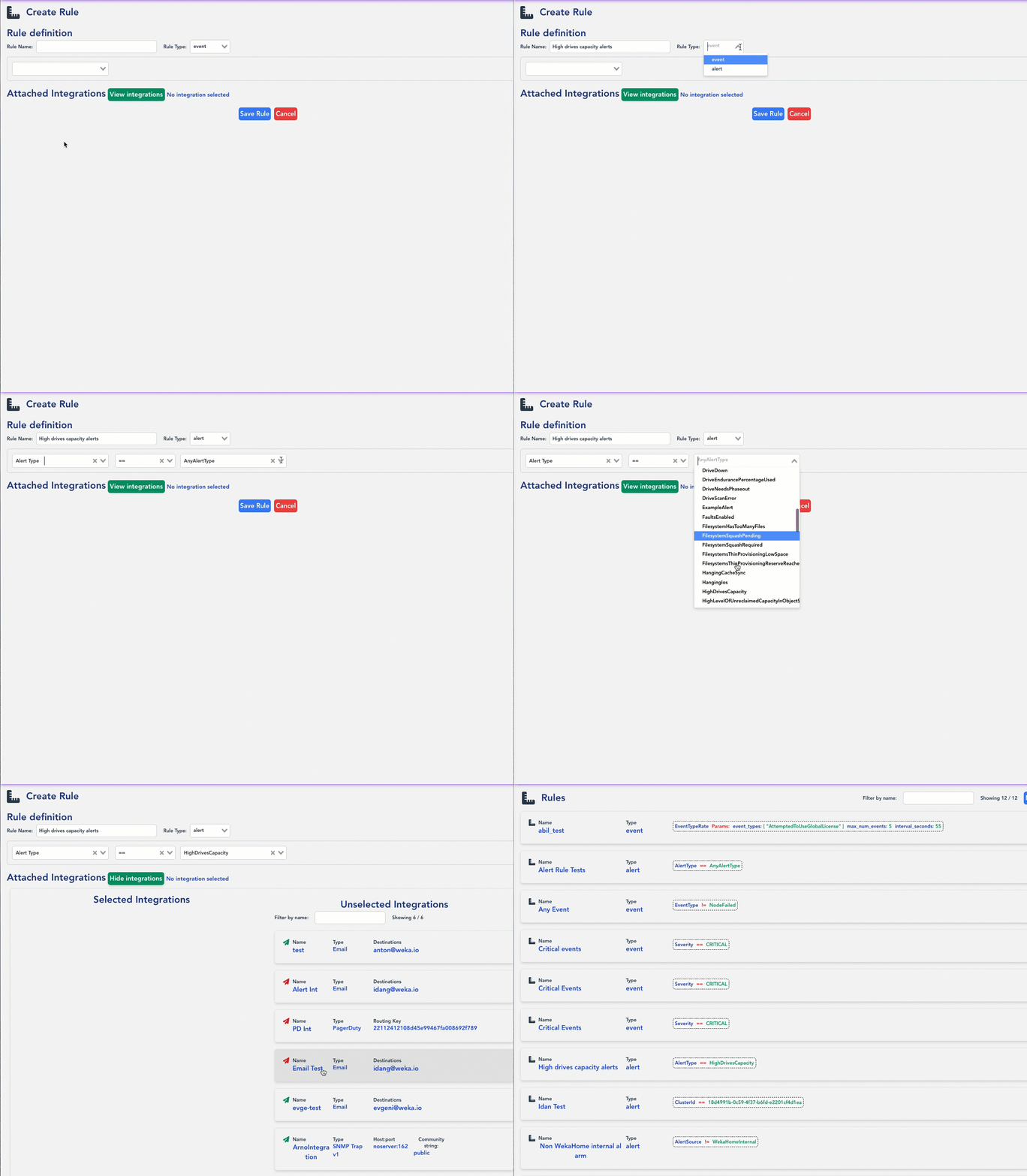
5. On the **Create Rule** page, do the following:
* Enter a meaningful name for the rule.
* Select the event or alert type from **Rule Type** and set the entity, operator, and condition, for the selected rule type.
* Select **View integrations** and then select the required integration (delivery method) from the list.
* Select **Save Rule**.
A green confirmation message appears for a successful setting.
{% tabs %}
{% tab title="Create an event rule" %}
{% endtab %}
{% tab title="Create an alert rule" %}
{% endtab %}
{% endtabs %}
---
# Agent Instructions
This documentation is published with GitBook. GitBook is the documentation platform designed so that both humans and AI agents can read, navigate, and reason over technical content effectively. Learn more at gitbook.com.
## Querying This Documentation
If you need additional information that is not directly available in this page, you can query the documentation by asking a question.
Perform an HTTP GET request on the following URL with the `ask` and `goal` query parameters:
```
GET https://docs.weka.io/4.1/support/the-wekaio-support-cloud/set-the-local-weka-home-to-send-alerts-or-events.md?ask=&goal=
```
`ask` is the immediate question: it should be specific, self-contained, and written in natural language.
`goal` is what the user is ultimately trying to achieve, the reason they need the answer. Sharing it helps GitBook give you a better, more relevant answer. A goal is most helpful when it describes the outcome the user wants rather than restating the question. For example, with `ask=how do I create an API token`, a goal like `automate deployments from our CI pipeline` lets GitBook tailor the answer to that use case.
The response will contain a direct answer to the question and relevant excerpts and sources from the documentation.
Use this mechanism when the answer is not explicitly present in the current page, you need clarification or additional context, or you want to retrieve related documentation sections.